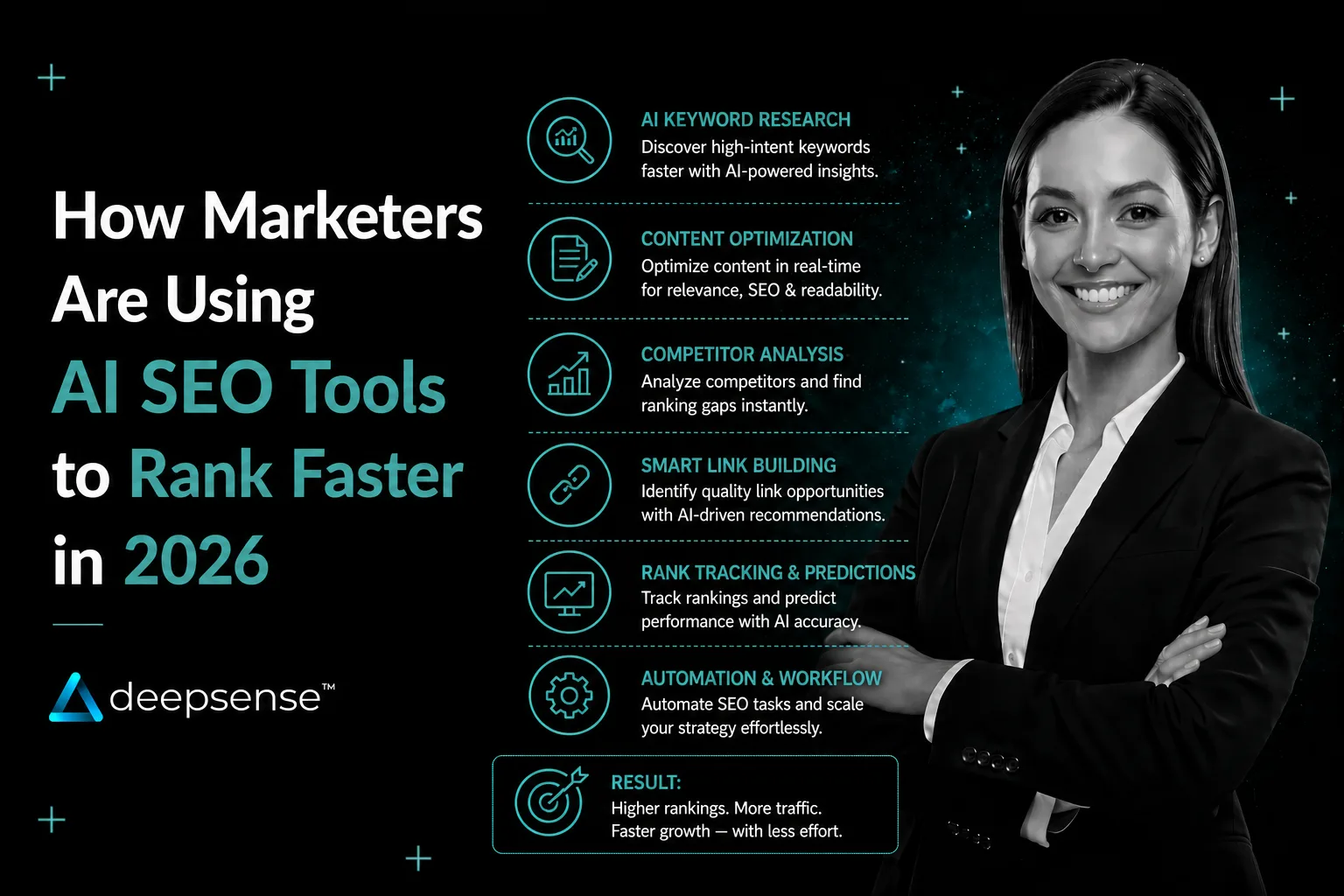
How Semantic SEO Resolves the Keyword Competitors Issue

Moving Beyond Basic Prompting in Modern Marketing
The year 2026 marks a considerable shift in how marketing departments manage digital production. The era of copy-pasting triggers into a web interface is over. Rather, expert content pipelines now rely on advanced orchestration layers that connect personal information repositories with localized models. This evolution has actually changed the method companies in the local market approach their digital existence, moving away from generic output towards highly particular, data-backed info.
Many organizations have actually moved their focus from the Big Language Design (LLM) itself to the data that feeds it. While the underlying designs have actually ended up being more efficient and more economical to run, the quality of the material depends totally on the exclusive information readily available to the system. Business now develop internal knowledge bases that serve as a single source of reality. When a model produces an article or a white paper, it doesn't just guess based on training data. It pulls direct realities, existing pricing, and local details specific to the surrounding region from a safe and secure vector database.
This approach, typically called Retrieval-Augmented Generation (RAG), has actually ended up being the standard for preserving brand name precision. It prevents the typical hallucinations that pestered earlier variations of AI-assisted writing. By anchoring the LLM to real-world data, marketing teams guarantee that every piece of content remains relevant to the particular requirements of their audience. Organizations prioritizing Asia Virtual Solutions Review find that their internal data becomes their greatest property, permitting them to produce high-volume content without compromising the precision that consumers expect in 2026.
Orchestration and Agentic Workflows for Digital Growth
The technical architecture of material marketing has matured. Rather of a single design doing all the work, teams now utilize "agentic" workflows. In this setup, various AI agents are appointed particular functions. One agent may be responsible for market research study, another for drafting the story, and a third for fact-checking against regional policies in the region. This department of labor mimics a conventional newsroom but runs at a speed that was difficult simply 2 years back.
These representatives interact through a central middleware that manages the circulation of information. This middleware guarantees that the tone remains consistent across different platforms. For example, a technical deep dive for a LinkedIn audience will share the same core truths as a short-form video script for social networks, even if the delivery style modifications. This consistency is essential for developing trust in any competitive market, where customers are increasingly careful of inconsistent or obviously automated messaging.
The combination of these representatives also enables real-time content updates. If a service offering modifications or a new policy is passed in the local area, the marketing pipeline can immediately flag all existing content for modification. The system determines which short articles or pages are impacted and generates upgraded versions for human evaluation. This proactive method to material upkeep keeps digital assets fresh and accurate with minimal manual effort.
The Human-in-the-Loop Governance Design
Despite the high levels of automation, the role of the human editor has actually never been more crucial. In 2026, the job description for a material developer has actually shifted towards "content engineering." These professionals do not simply write sentences. They design the systems that produce them. They oversee the quality of the data inputs and spend their time refining the logic that the AI representatives follow. They act as the last gatekeeper, guaranteeing that the psychological resonance and ethical standards of the brand are met.
Governance structures now include "LLM-as-a-judge" systems. This involves a 2nd, extremely capable model that audits the work of the main generation designs. The auditing model checks for predisposition, tone alignment, and accurate consistency. It appoints a rating to each piece of content. If ball game falls below a particular limit, the material is sent back for a manual rewrite. This layered technique to quality control minimizes the threat of brand damage and ensures that the output is equivalent from high-quality human writing.
For organizations concentrated on specialized industry outreach, this level of oversight is compulsory. Financial investment in Asia Virtual Solutions Review has actually moved from basic speculative spending plans to core operations, needing clear responsibility. Human editors in local agencies now concentrate on technique and high-level creative instructions, leaving the recurring tasks of formatting, basic SEO optimization, and initial drafting to the automatic pipeline.
Localized Content and the Power of Regional Context
One of the biggest challenges in earlier AI adoption was the lack of local subtlety. Generic models typically missed out on the cultural or geographic specifics that make content feel authentic. In 2026, the use of little, fine-tuned designs has fixed this issue. These designs are trained on smaller datasets that specify to a particular market or place. When a company desires to discuss its impact in the local community, the design understands the specific location, landmarks, and regional belief.
This localization exceeds simply switching out city names. It includes comprehending regional dialect, regional choices, and the specific discomfort points of homeowners in the local region. A marketing project for local offerings in 2026 feels as if it were written by a lifelong local due to the fact that the information feeding the system consists of regional news, neighborhood online forums, and regional economic reports. This level of information makes the material more appealing and increases the possibility of conversion.

- Data-driven personalization based on real-time local patterns.
- Automated translation and localization for multilingual communities.
- Integration of local events and seasonal modifications into the material calendar.
- Fact-checking versus regional laws and industry standards.
Technical Difficulties: Precision and Expense Management
While the advantages are clear, integrating LLMs into a production pipeline is not without obstacles. Handling the expense of "tokens"-- the systems of text the models process-- remains a top priority for department heads. High-end designs are costly, and running millions of tokens through them daily can drain pipes a budget rapidly. Savvy teams now use a tiered technique, employing smaller, open-source models for fundamental jobs and reserving the most effective models for last polishing and complex reasoning.

Hallucinations also remain a technical hazard, though they are much rarer than in 2024. The solution in 2026 is a rigorous "grounding" procedure. Every claim made by the model must be backed by a citation from the internal understanding base. If the model can not find a source for a statement, it is programmed to omit it or flag it for human verification. This architectural constraint is what allows professional firms to rely on automatic systems with sensitive or technical details.
The speed of these systems has actually likewise improved. In the past, generating a 2,000-word report might take a number of minutes. Today, the process is near-instant, enabling vibrant content generation. A website can now alter its text in real-time based upon the behavior of the visitor, offering a customized experience that feels direct and helpful. This level of responsiveness is a hallmark of the 2026 digital environment.
Long-Term Strategy and Material Durability
Constructing a pipeline is a long-term dedication. It requires a stable technical foundation and a continuous circulation of fresh information. Content is no longer a static possession that is released and forgotten. It is a living part of the business's digital identity. The most successful strategies in the modern market focus on the durability of details. By developing a system that can automatically upgrade and repurpose material, business ensure their marketing efforts continue to offer value long after the initial publication date.
The shift to these automated pipelines represents a basic change in the economics of material. The expense of production has actually dropped, but the value of original, top quality data has skyrocketed. In 2026, the most successful brand names are those that own their information and know how to use it efficiently within their AI systems. They don't simply use AI to write; they use it to think, analyze, and link with their audience on a much deeper level.
As the innovation continues to develop, the space in between business using these systems and those relying on manual processes will likely broaden. The capability to produce tailored, accurate, and localized material at scale is no longer a high-end. It is a requirement for remaining competitive in a market that moves faster every day. The focus stays on the marital relationship of human creativity and machine effectiveness, making sure that the digital voice of a business stays genuine, practical, and constantly progressing.